Clear as Glass: Why Glassmorphism Drives High-Converting UI Frameworks
Discover how glassmorphism blends luxury aesthetics with spatial psychology to create immersive, high-converting corporate interfaces.
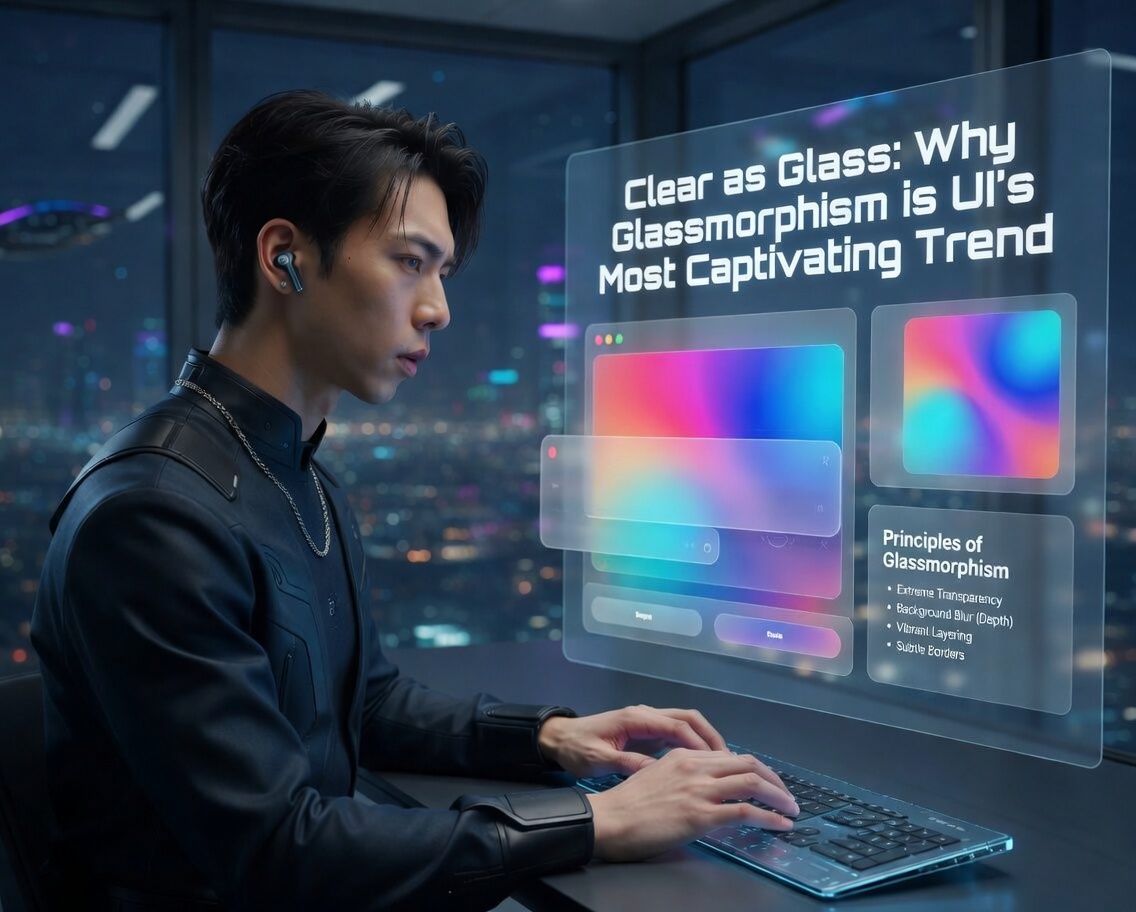
In the high-stakes landscape of digital marketing and elite corporate engineering, visual architecture is far more than a skin-deep luxury—it is an instantaneous communicator of brand equity and technical maturity. When a high-ticket B2B enterprise or an advanced consumer platform seeks to command premium market attention, generic flat layouts no longer move the needle. Attention spans are fractional; human psychology demands an interface that commands status, provides instant tactile depth, and maintains absolute cognitive clarity.
Welcome to the definitive era of Glassmorphism.
Far from a passing aesthetic trend on speculative mood boards, glassmorphism has crystallized into the modern design language for elite software ecosystems. It is anchored natively into flagship platforms like Apple’s visionOS, Windows Fluent Design, and high-conversion enterprise SaaS pipelines worldwide. For business owners, founders, and digital growth engineers, understanding the operational mechanics of this paradigm is critical to transforming passive web traffic into high-value clients.
The Structural Anatomy of Glassmorphism
To implement glassmorphism successfully within a modern production application (such as a Next.js and Tailwind CSS stack), engineering must carefully balance visual styling with client-side performance. True glassmorphism is defined by a rigorous interplay of four core architectural vectors:
- Translucency with High-Density Background Blur: Utilizing real-time computational layer distortion techniques to establish a frosted glass texture. In performance-driven code, this is executed via hardware-accelerated properties like
backdrop-filter: blur(20px), letting underlying brand assets bleed safely through without muddying content readability. - Multi-layered Spatial Geometry: Setting distinct absolute positioning layers across the vertical dimension hierarchy ($z$-index). Context-driven content elements explicitly hover above a moving, multi-tonal background canvas.
- Subtle Multi-Directional Reflective Highlights: A thin, semi-transparent border contour—often a top-to-bottom variable gradient like
rgba(255,255,255,0.15)torgba(255,255,255,0.02)—which mimics the natural refraction of physical glass edges and isolates the layout card from the canvas background. - Chromatic Contrast Canvas: Relying on highly organic, vibrant, shifting gradients beneath the glass layers. These generate soft, abstract color clouds that dynamically morph as the user scrolls.
Comparative Matrix: Glassmorphism vs. Alternative Paradigms
To truly understand why glassmorphic integration serves premium engineering so effectively, we must contrast its mechanics against other historical and modern visual layout patterns.
1. Flat Design (and Flat 2.0)
- The Core Vector: Zero textures, strict 2D layouts, and solid flat color fills.
- The Conversion Strength: Ultra-low page weight and immediate mobile responsiveness.
- The UX Fragility: A total lack of contextual depth often causes severe user choice paralysis because elements don't look distinctly clickable.
2. Neumorphism
- The Core Vector: Soft inner and outer shadows mimicking extruded soft plastic components.
- The Conversion Strength: Provides a highly tactile, uniquely cohesive physical feel to buttons and cards.
- The UX Fragility: Catastrophic accessibility issues. The incredibly subtle color changes present severe low-contrast barriers for visually impaired users.
3. Skeuomorphism
- The Core Vector: Hyper-realistic digital imitation of physical textures like leather, paper, or brushed steel.
- The Conversion Strength: Instant user intuition because it maps 1:1 with real-world physical objects.
- The UX Fragility: High visual clutter, heavy code weight, and an aesthetic that ages incredibly poorly.
4. Glassmorphism
- The Core Vector: Frosted light refraction combined with a strict multi-layered vertical hierarchy.
- The Conversion Strength: Projects a high-end luxury aesthetic while retaining crisp, readable text layouts.
- The UX Fragility: Requires smart engineering with backdrop-filter CSS safety guardrails to ensure older devices degrade gracefully.
The Psychology of Premium Conversion: Why it Drives Revenue
Modern conversion engineering relies heavily on subconscious trust vectors. Premium interfaces demand high aesthetic conviction. When a corporate founder arrives on an optimization ecosystem designed with curated glassmorphism, three psychological pathways activate instantly:
1. Drastic Reduction in Cognitive Load
By using blurred transparency layers instead of heavy solid borders or stark dividers, the human brain naturally de-prioritizes background information and sharpens focus on active foreground modules. This reduces choice friction, smoothing onboarding loops and high-ticket checkout flows.
2. High-Status Value Projection
Physical frosted glass is heavily utilized in luxury architecture, high-end automotive design, and precision hardware interfaces. Translating this specific refractive texture over to software immediately maps those exact subtexts of premium value onto your product or agency service offering.
3. Subconscious Layout Context
Because the background remains partially visible, users maintain spatial awareness of where they came from and where they are going within an app interface. This eliminates navigating disorientation, reducing bounce rates on complex landing pages.
Engineered Performance: Best Technical Practices
As an agency dedicated to high-performance AI automation and digital scalability, Fusion AI builds with an absolute focus on system speed. Glassmorphic styling can degrade performance if poorly coded. Follow these structural development laws:
- Enforce Hardware Acceleration: Ensure layers utilize
transform: translateZ(0)orwill-change: transformto force texture rendering onto the client device GPU, preserving 60 FPS scrolling speeds. - Strict Contrast Ratios: Layer crisp text colors (
#FFFFFFor dark high-contrast charcoal depending on mode) over an internal card fill ratio of at leastrgba(15, 23, 42, 0.65)to guarantee full compliance with Web Content Accessibility Guidelines (WCAG). - Graceful Degradation: Implement fallback configurations using CSS feature detection queries (
@supports not (backdrop-filter: blur())) to ensure older devices render beautiful solid opacity blocks gracefully without throwing layout-breaking rendering errors.
Frequently Asked Questions (FAQ)
Q: Does glassmorphism hurt a website's Google Lighthouse performance or Core Web Vitals?
A: Only if implemented incorrectly. If a site applies heavy backdrop filters indiscriminately across dozens of animated elements, it can spike Interaction to Next Paint (INP) times. When built properly by limiting properties to persistent nav panels, modals, and primary focus blocks with clean GPU offloading, the impact on Core Web Vitals is effectively zero.
Q: Is glassmorphism accessible for visually impaired users?
A: Yes, provided you do not rely on the glass border alone for contrast. The background card overlay must maintain a dark or bright enough opacity baseline to ensure text elements achieve a strict 4.5:1 contrast ratio against the blurred background images underneath.
Q: Why should a B2B SaaS choose glassmorphism over standard clean flat design?
A: Flat design often feels commoditized and sterile, making competing applications look identical. Glassmorphic accents inject high-end industrial design and premium tech sophistication, creating an emotional product differentiation that commands higher contract values.
Scale Your Product Architecture with Fusion AI Agency
Is your corporate interface leaking high-ticket conversions due to an outdated, low-end user journey? Our growth engineers specialize in deploying cutting-edge Next.js architecture, premium glassmorphic interfaces, and fully automated AI funnels configured for maximal market impact.
Transform your brand aesthetic today. Partner with Fusion AI Agency →

Kanat Nazarov
Systems Architect & Founder
Kanat Nazarov is a Full-Stack Developer and Systems Architect specializing in engineering high-speed, high-concurrency web ecosystems and autonomous conversational AI layers. Operating directly at the intersection of technical engineering and organic visibility, he builds robust Next.js and NestJS backends, designs secure RAG-driven datasets supporting tens of thousands of active users, and configures programmatic schema infrastructures that achieve top search rankings and high-intent commercial growth.